Skipping Retirement
Imagine a world without non-profits? That is the equivalent of a nightmare. The world would be so far worse off. Countless men, women and children would be deprived of a decent quality of life and there would far less hope that we could do anything to make things better. This is not to say that there is so much pressing work to be accomplished. We keenly recognize that the problems surrounding us are so overwhelming that we don’t know where to start.
Understand the resolve of everyone in the Herculean non-profit family to make a positive difference. By reading to one child at a time, putting a smile on the face of one senior at a time, fostering one stray cat or dog at a time, introducing culture and the arts to one underserved person at a time and a host of other ways one person at a time, you reinvigorate the sense of hope and that more is possible in the world. And you enthusiastically do it again, again, again and again. We recognize everyone in the social sector as true brothers and sisters in a common quest to champion the spirit to take matters into our own hands and in doing so change the world for the better. You boldly remind us of Abraham Lincoln’s “better angels of our nature.” At the outbreak of the pandemic, we proudly introduced our Non-Profit Strong graphic to reinforce our mantra that we do not shirk responsibility to serve humanity, we welcome it. Here is our EIN Presswire news release titled Celebrate National Nonprofit Day on August 17th and Every Day.

Lifelong Learning and Lifelong Sharing
We firmly believe that a day without learning is a day wasted. That drives our relentless commitment to provide our learning community partners of professional and volunteer non-profit leaders with a variety of opportunities to learn from nationally respected experts and from each other. We were so proud to organize the recent Major Gifts Ramp-Up conference in bringing together the broadest possible cross section of San Antonio (and beyond) professional and volunteer non-profit leaders. The bold initiative teamed up the collective resources of the National Development Institute, Association of Fundraising Professionals – San Antonio, The Nonprofit Council, Greater San Antonio Chamber of Commerce and Eskin Fundraising Training. Some 125 non-profit leaders joined together to acquire the skills, mindset and confidence to overcome barriers and secure leadership gifts to unlock exciting growth and impact potential.
The conference theme recognizes that more and more resource development success depends on securing major gifts. An estimated 90% of American philanthropy’s vast near $600 billion annual enterprise comes from just 10% of the donors. Major gifts represent the surest — if not the only — realistic path for non-profits to achieve viable and sustainable funding for their programs and services in pursuit of noble missions.
We were genuinely humbled by the generosity of praise from Jimmy LaRose in a Major Gifts Ramp-Up feature. But we are keenly aware that if there is credit to be given there are so many other outstanding men and women who rightfully must share it. Like so many others in the wondrous non-profit sector, we ponder if one person can make a difference. Fortunately, we’ve concluded that through a combination of grit and pluck, when we join together as kindred spirits who forge bonds of a shared vision into genuine mountains of friendship there is so much we can accomplish as a force for championing good works. The Major Gifts Ramp-Up conference is a glowing example that more is possible and that we can and should relentlessly aim and reach higher in pursuit of a stronger, brighter and more socially just future. Our heartfelt gratitude to the entire awesome team who partnered in such an uplifting initiative to bring out the best in all of us to realize the common good. Let all of us continue to embrace this beautiful partnership in our pursuit of a new and better world.
America's First Non-Profit

There are more than 1.5 million non-profits in the U.S. spanning all different missions, sizes and parts of the country. Which one came first? Recognizing that National Nonprofit Day is coming up on August 17th … it’s a great time to raise the question.
George Peabody, known as the “father of modern philanthropy,” was born in Massachusetts in 1795. At age 11 he began apprenticing, with only four years of formal schooling. A few years later his father died leaving the family in debt, so Peabody went on to serve in the Army and work as an entrepreneur to support his family. In 1835, he established George Peabody & Co., an international merchant bank, and in the 1850s, dedicated his life to philanthropy in the United States and England, donating an estimated half of his $16 million. Peabody funded the construction of affordable housing in London with subsidized rent, gas lights, and running water. In the late 1860s, he visited the U.S. and created the Peabody Education Fund with a $2.1 million endowment to improve primary and secondary education in 12 southern states, requiring local leaders to match funds. Historians consider the Peabody Education Fund established in 1867, the first non-profit in America. Its main goal was to help integrate poor white and formerly enslaved people in the South and assist in the rebuilding of the educational system after the devastation of the Civil War. George Peabody’s generous donation went to the construction of schools, endowments, scholarships, teachers, and industrial education. Peabody’s fund was placed into the hands of trustees from the North and South to oversee and use towards educational systems in the southern states.
The fund introduced a new type of benefaction in that it was left without restriction in the hands of the trustees to administer. The rules of the Peabody Education Fund were strict, allowing for the distribution of about $80,000 per year over a period of 30 years. By the time of the termination of the fund in 1898, about $2.5 million had been distributed.
Roadrunner Strong

You never forget your first million-dollar gift. For me it was Friday, December 4, 1998, at 11:15 a.m. I was relatively new in my role as Development Officer for The University of Texas at San Antonio College of Business (now Alvarez College of Business), when we experienced the excitement of scoring UTSA’s first million-dollar gift from a philanthropist 8,267 miles away in Hong Kong. Richard Liu, Founder of Superior Leather, who had developed a long-time friendship with our Dean, Dr. Jim Gaertner, funded student and faculty exchanges, executive education, research collaboration, and joint programs. Liu has made gifts totaling more than $5 million to UTSA. This is a vivid reminder that your donors literally can come from all over the world. As exhilarating as that moment was, we could never imagine that in 2025 the university would exceed its goal of raising more than $500 million through its largest fundraising effort in its history, Be Bold: A Campaign for Our Future. The ambitious campaign aimed to accelerate student success, advance research excellence and expand the university’s community impact. First conceived in 2017 and set to run for 10 years alongside the university’s strategic plan, the Be Bold campaign garnered support from more than 60,000 donors who contributed over 200,000 gifts and pledges, enabling the campaign to not only meet its fundraising goal but also exceed it within eight years. The announcement comes one month before the historic merger of UTSA and UTHealth San Antonio on September 1, 2025. This merged university, UTSan Antonio, will become the third-largest research university in Texas. One of the most defining aspects of the Be Bold campaign was the strength of alumni engagement. More than 110,000 alumni supported UTSA through charitable giving, volunteerism, event attendance, digital engagement and more. Additionally, of the campaign’s more than 60,000 donors, over 33,000 were alumni. Kudos to Karl Miller Lugo, UTSA Vice President for Advancement and Alumni Engagement, and his awesome team. He is rightfully one of the most respected advancement leaders in the nation.
Hooray for Trust-Based Philanthropy
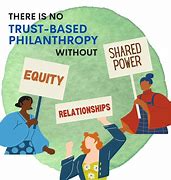
We are profoundly encouraged by seeing more and more examples of funders providing non-profits with the flexibility to spend grants when and where needed most. The latest uplifting leadership in trust-based philanthropy is being shown by Houston Endowment (HEI) in expanding its commitment to HEI Collaboration Fund, providing local grantee partners $15 million to support their leadership and resiliency and strengthen the non-profit sector in Greater Houston. This latest round of funding builds on the success of the 2024 Collaboration Fund launch, which provided grantee partners with $5 million to help strengthen organizational capacity. HEI is telling its partners that they know best organizational priorities, needs and resource allocation. The new program offers eligible grantee partners $100,000 to invest in ways that strengthen leadership and improve organizational resilience, such as strategic planning, professional development, succession strategies, fundraising capacity or other critical needs identified by the organization itself. Center for Effective Philanthropy research reinforces that flexible support not only improves organizational sustainability but boosts leadership confidence, sparks innovation, and reduces burnout.
Fundraising Dream Team

Everyone brags about teamwork, but it is truly a rare commodity. In resource development where there isn’t a dollar or moment to waste to achieve the greatest possible gift income, it’s a necessity.
Our thanks to Lieve Hendren, Senior Consultant at Alford Group, for advice and counsel on maximizing the performance of development professionals contributing individually and as a cohesive team.
(1) Lead Collaboratively and Build Trust.
Picture this: A fundraising team where everyone’s voice is heard, ideas flow freely, and trust is the glue that holds it all together. Instead of relying on top-down directives, collaborative leaders empower staff at every level to contribute, take ownership and bring their unique strengths to the table.
(2) Operationalize Your Non-Profit’s Values.
Clearly communicating your non-profit’s vision and goals is the first step to motivating and aligning your team. But to truly spark creativity and ownership, you need to go deeper. Connect your team goals to your organization’s core values and make those values actionable in daily work.
(3) Set Challenging But Achievable Goals.
Speaking about goals, setting the right level of challenge is crucial for keeping your fundraising team engaged and performing at their best. Steven Kotler, a leading researcher on peak performance, identifies the “4% challenge zone” as the sweet spot for activating flow — the mental state where people are fully immersed and highly productive. This means your goals should be just slightly beyond your team’s current abilities, pushing them to grow without overwhelming them.
(4) Restructure Your Meetings. Research shows that meetings with a clear purpose, structured agenda and defined roles not only save time but also improve decision quality and team satisfaction. By intentionally designing your meeting strategy, you can foster an environment where all voices are heard, and creative ideas are generated. Your team will leave the meeting feeling energized and aligned.
(5) Bring Joy to Your Donor Relationships.
High-performing teams aren’t just focused on meeting year-end targets. They dedicate energy to nurturing genuine, lasting relationships that inspire ongoing support. More than relationships, the real goal is friendships. The most successful non-profits know that every donor is a valued partner in your mission and merits as much personal attention as possible.
Coming Soon: A New Video Series

We constantly remind our non-profit friends that short videos rank at the top of the list of most effective and efficient ways to tell their stories to donors, prospects and other friends. In the spirit of taking our own advice, we are proud to announce our 9 Inning Video Series to empower organizations of all different missions, sizes and parts of the country to play and win Non-Profit Moneyball. Based on highlights of our second book, How to Score Your First or Next Million-Dollar Gift, this nine-part series of instructional two-minute videos will acquaint you with some of the core lessons on how your non-profit can more robustly provide programs and services, management, staff, board, volunteers and especially beneficiaries with the resources they so richly deserve. You can access the videos through our Constant Contact communications and social media starting later in the month. Segments feature:
- First Inning: Your Dream
- Second Inning: Standing Out
- Third inning: The Gift Cycle
- Fourth Inning: CIA Prospect ID
- Fifth inning: Best Story Wins
- Sixth Inning: Gifts From Individuals Rule
- Seventh Inning: Planned Giving Explosion
- Eighth Inning: Friendships Are Forever
- Ninth Inning: Now Is The Best Time
Breaking the Ice

Typically, we hear that asking for the gift is the most frightening part of the gift continuum that begins with “nice to meet you” and culminates with “thank you for your generous gift.” That is but a single moment in a high-stakes process which is preceded by so much else. The longest journey begins with a single step, so in fundraising, we cannot overstate the value of the initial warm introduction to the donor prospect. This is typically secured by a member of the non-profit family that the donor prospect knows, likes and trusts. They don’t need to ask for the gift, but they contribute mightily by simply breaking the ice. See our Bloomerang article, Securing The First Donor Meeting, for insights on overcoming this obstacle.
Donor and Fundraiser Retention

Philanthropy is being threatened by two alarming retention declines — keeping donors and keeping development professionals. Make no mistake about it — these two trends are closely related. It’s impossible to address one without addressing the other. For a long time, keeping high performing development professionals has vexed the non-profit sector. Now the problem has risen to crisis proportions. Non-profits are lucky if they can keep high performing staff for 16 to 24 months. This is nothing short of business insanity. So much is being forfeited. Meeting this perplexing challenge means addressing compensation and benefits and much more. Read our Inside Charity article, “10 Ways to Keep Fundraisers Fundraising,” for more on this timely challenge.
On Bookshelf: Putting Wealth to Work

Americans are donating nearly half a trillion dollars annually to non-profits. Those philanthropic gifts transform significant parts of America’s civic sector landscape. Philanthropy is entering an era of unprecedented growth and innovation. Established foundations such as Ford and Rockefeller are doubling down on programs tackling long-simmering problems, including global inequality, less-than-stellar education, and uneven access to health care. Many foundations are engaging in advocacy on controversial issues, exploring venture philanthropy solutions, and experimenting with impact investing. And philanthropists such as Bill Gates, Warren Buffett, New York’s high-profile financiers, and Silicon Valley’s billionaires are to put their wealth to work as never before. Mark Zuckerberg and Priscilla Chan pledged to donate 99% of their Facebook shares during their lifetimes, and more than 250 others have signed the Giving Pledge to increase dramatically their “giving while living.” In Putting Wealth to Work, Joel L. Fleishman provides expert analysis of contemporary philanthropy, offering invaluable insight for those engaging with and affected by charitable foundations. This is a fascinating and definitive account of philanthropy today, and an indispensable guide to understanding its inner workings, impact, and expansive potential.
Scam Paranoia

If you’re worried about phone calls, text and e-mail from sources you don’t know, you have every reason to be. The situation is serious and growing worse every day. And the sophistication of scamming is escalating. Online scams and other Internet crimes are skyrocketing, with a record $16.6 billion in losses reported to the FBI in 2024. The federal government, banks and companies are all sounding alarms. And the public is also wary, with many having firsthand experience. A Pew Research Center survey indicates:
- Nearly all Americans view online scams and attacks as a national problem. More than nine-in-ten say online scams and attacks are a problem in the country, including 79% who describe them as a major problem.
- Most U.S. adults have been a victim of an online scam or attack. Pew finds that 73% of U.S. adults have experienced things like credit card fraud, ransomware or online shopping scams.
- While Americans see older adults as more vulnerable to these crimes, significant portions of both older and younger adults have been scammed and targeted.
Unfortunately, the ramifications are profound for the non-profit sector. It’s only natural that good causes will be viewed with more skepticism and less likelihood that their messages will even be received.
Quiz: Largest Universities
It’s back to school time. And millions of students of all different ages and socio-economic backgrounds will begin or continue one of life’s most fulfilling and exciting journeys — higher education. There are no bad institutions of higher learning … only opportunities to realize more of your personal potential. Match the following institutions with their respective undergraduate enrollments to answer this question. Answers are shown at the bottom of the page.
1. Arizona State a. 42,223
2. Florida International b. 42,444
3. Ohio State c. 44,045
4. Penn. State d. 45,728
5. UT-Austin e. 65,174
Stratagems is published monthly by Jim Eskin, Founder of Eskin Fundraising Training, LLC. We offer workshops and customized training sessions for board members, staff and volunteers of non-profit organizations of all kinds and sizes. For details about our services and information, or to find out how to schedule a training session for your organization, visit our website. Follow our events on Facebook, and read more articles about philanthropy on our LinkedIn page.
Jim Eskin, Founder
Eskin Fundraising Training
Email: [email protected]
Cell: 210.415.3748
www.eskinfundraisingtraining.com

ANSWERS TO THIS MONTH’S QUIZ: 1=e 2=c, 3=d, 4=a, 5=b |