We Are True Believers
To be an effective non-profit professional or volunteer, you have to be a true believer (not in religious terms, though that never hurts). But you believe passionately:
- In the nobility of your cause.
- In the ability of your organization to be prudent stewards of every dollar it receives.
- In Abraham Lincoln’s “better angels of our nature” among our donor prospects who dig deep and share time, talent and treasure commensurate with their capacity.
- In your conviction to put any personal differences aside to join together with all those who share your vision of a better world to focus on the greater good.
- And most profoundly, that each of us in our own ways can make a positive difference in the world.
As cosmetics icon Elizabeth Arden said:
“I only want people around me who can do the impossible.”
Well, the millions of members of the non-profit family make the impossible possible every day, and then they do it again, and again as much as they can and for as long as they can.
Please read our article featured in Bloomerang, titled “Can one person’s generosity really make a difference?”

TV Talk Show for Non-Profits
Our Zoom-based Fundraising, Friendship, Fun live broadcasts resume on Wednesday, October 8th, 4 to 5 p.m. Central time. During the same time frame subsequent broadcasts will air on November 5th and December 3rd.
We are tweaking the format to continue to make it more conversational and interactive and achieve robust audience engagement. Our vision is to mimic the chemistry of talk shows. By sharing your wisdom, experience and personal insights you will make this vision come true. The newest segment is called Donor Dilemmas with the audience randomly divided into three breakout groups and given three minutes so that they can share a response to the following challenges:
October: A member of the staff is given a personal gift (not to be confused with a gift to the organization) that is on the extravagant side, for example in the neighborhood of a $10,000 value. There has been absolutely no inappropriate behavior. What should the recipient do?
November: You are working with a couple on a potential major gift and during your meetings they have vehement disagreements on personal issues, completely shifting the focus away from the non-profit. What should you do?
December: You have a CEO, Executive Director or a board chairman that major donors profusely dislike. But that leader who outranks you wants to participate in the donor meetings. What should you do?
Ahead of time, we will designate discussion leaders who will lead the breakout groups and report back to the audience as a whole on their conclusions. We want to address complex issues that do not have easy black or white responses and do come up in our non-profit and for-profit workplaces more than we like. This is truly an exercise in capturing the wisdom of the whole. You are encouraged to submit your own donor dilemmas for discussion in future broadcasts. You can register here for the October 8th broadcast.
In Brains We Trust

We are delighted to report that we are bringing back some familiar friends and have recruited new distinguished thought leaders to help facilitate broadcasts. The goal continues to feature a multidisciplinary and truly international panel of subject matter experts on a variety of topics. Depending on schedules and topics, experts may differ from month to month.
Some of the new experts include:
- Megan Venzin: Based in Lisbon Portugal, a Renaissance Lady as dance music journalist, editor and certified yoga instructor (shown in photo). In the non-profit space in 2008 she served as Marketing Director for Know Theatre of Cincinnati and Cincy Fringe before working for Dress for Success and then moved to New York City to study improv comedy.
- Laura Vaccaro: CEO, Kronkosky Charitable Foundation, San Antonio, leading a perpetual trust with more than $400 million in assets and an annual grant distribution of $15 million to $20 million.
Some experts returning will include Dr. Chuck Pozner, Associate Professor of Emergency Medicine (Ret.) at Harvard Medical School, and a pioneer in medical simulation and education; Marjorie Hope, best-selling author of CONNECTIPLOMACY, Using Our Differences to Connect; Rhanda Luna, Social Justice Is Everyone’s Business; Don Gleason, CEO & President, Achieve New Heights
October 9th is DAF Day

Be sure that your calendar is marked for: National Philanthropy Day — November 15th; National Nonprofit Day — August 17th and Giving Tuesday — the first Tuesday after Thanksgiving.
Since they are so profoundly reshaping philanthropy be sure to add DAF Day — Thursday October 9th.
Our friends at Chariot are playing a huge leadership role in educating non-profits and the general public about this special day now in its second year. At its core, a Donor-Advised Fund is a tax-advantaged account dedicated to charitable giving. Think of a DAF like a 401(k) for retirement or an HSA for healthcare. It’s a container for giving — donors contribute, get an immediate tax benefit, and then recommend grants over time. Once assets are placed into a DAF, they are irrevocable. Donors can’t take them back, and the funds can only be distributed to qualified non-profits. Popular contributions include cash, appreciated stocks, and even complex assets like real estate. DAFs combine convenience with strategy. Instead of managing multiple receipts and donations throughout the year, donors consolidate their giving in one place. People see DAFs as an advantage over checkbook giving or even private foundations. They’re simpler, more flexible, and come with real tax efficiency.
DAFs are no longer a niche tool. This is a quarter-trillion-dollar sector and growing fast with non-profits receiving about $55 billion in grants a year. Even more striking: Research shows that while most non-profits are seeing flat or declining revenue from traditional giving, over 80% of participants in the 2025 DAF Fundraising Report reported growth in DAF revenue in 2024, with the median being +30% year-over-year. DAF giving is also not limited to major donors. 69% of DAF gifts are under $1,000, which underscores the democratization of this giving vehicle across donor levels.
Despite their popularity, DAFs are still underused in spontaneous giving moments. A recent survey by Giving Compass found that 37% of donors skipped using their DAF just on their latest gift simply because it was “too many steps.” Some practical steps for non-profits to solve this friction:
- Audit your website — add your EIN and a dedicated DAF giving page.
- Include DAFs in your appeals — wherever you list ways to give, mention DAFs.
- Enable DAF technology – tools like DAFpay allow donors to use their DAF as seamlessly as Apple Pay or PayPal, and is available on dozens of fundraising platforms.
Storytelling Power

As if we needed any reminding, Storyraise’s Benchmark Report on Storytelling indicates that more than 70% of respondents said they’re more likely to donate to a non-profit that effectively uses storytelling to communicate mission and impact. And when your mission is focused on eradicating poverty, ending hunger, fighting individual or systemic injustice or violence, we can imagine what types of stories are most impactful.
To be successful, non-profits must tell stories. Good ones. Storytelling is the bedrock of fundraising. A most ancient art of connectivity. A way to turn emotion into action.
Every project, whether an impact report or an end-of-year campaign, is framed and fueled by the relationship between storytelling and fundraising. Based on survey responses, the report distills five core learnings:
(1) Storytelling positively impacts giving: Fundraising is the what. Storytelling is the how. More than 70% of respondents said they’re more likely to donate to a non-profit that effectively uses storytelling to communicate mission and impact. And more than 80% of respondents said they are likely to continue supporting that non-profit if they are fed regular updates with stories about the people or causes, they serve.
(2) Non-profit storytelling increases non-profit transparency: Nearly 60% of respondents said they believe non-profits that effectively use storytelling are more transparent about their work and impact. Givers want to know where their dollars are going and what their dollars are doing. By sharing your stories, you increase their confidence in you, and the likelihood that they’ll keep on supporting you.
(3) Donors prefer to receive stories digitally: You have to use the right channels to reach the right people. Nearly 70% of respondents said they prefer to receive storytelling content from non-profits through digital channels, with social media posts taking the lead (20%), followed by websites and blogs (15%), email newsletters (13%), videos (13%), printed materials (10%) and podcasts (4%).
(4) Donors are more likely to give if they receive personalized stories: Nearly 80% of respondents said they are likely or very likely to support a nonprofit that shares stories about issues they care about. When you craft a narrative for a specific donor, you address their personal connection to your cause. This is story-tailoring, the most personal and magical form of storytelling.
(5) When storytelling, nonprofits have to show, not just tell: Donors have to see your impact to believe your impact. You can and should use multimedia — some combination of words, videos, photos and statistics — to validate your work to prospective and current donors. When storytelling is done well, it can be the gift that keeps on giving. The numbers confirm that. Approximately 70% of survey respondents said it’s important for non-profits to send stories or testimonials so they can see the result of donations. And 90% said it’s important to see data and statistics as part of those stories.
Asking The Right Questions

Ask donor prospects the right questions and listen carefully and they will tell you how much, when and for what purpose they will make gifts of time, talent and treasure to your non-profit. The key is in active listening and guiding the conversation, so you discover what’s truly important. Our good friend and mentor Laura Fredricks preaches that during a successful meeting the donor speaks 75% of the time and the non-profit representative only 25%. Bloomerang has released a fascinating 42 Questions to Ask Major Donor Prospects Before You Ask for a Gift. Here are the 10 opening questions to break the ice.
(1) Where were you born?
(2) How did you get where you are today?
(3) What were the most important lessons you learned from your parents?
(4) Would you tell me a bit about your family?
(5) If you won the lottery, how would you spend your time?
(6) What are you most proud of?
(7) If you could leave a legacy for future generations, what would it be?
(8) What do you think about ____________ ? (Ask them about a project or a campaign; see if they think it’s something your organization should be doing).
(9) Please give me your guidance on ____________ ? (Ask them about how they might recommend getting people interested and involved. Where do they think the necessary philanthropy might come from?)
(10) What do you think we should do? (Ask them if they have other suggestions/ways to approach this issue.)
Small Non-Profits Get Major Gifts

The vast majority of America’s 1.5 million non-profits have annual budgets less than $1 million, and many far less. Still, make no mistake, they provide programs and services that intimately touch, improve and save more lives, especially helping those who are struggling. Most are community based and finely tuned into the needs, priorities and sensitivities of those within their reach. Can they compete with much larger organizations for major gifts, even transformational million-dollar gifts? You bet they can! They even benefit from some strategic and tactical advantages. Eskin Fundraising Training is grateful to Jimmy LaRose and Major Gifts Ramp-Up for featuring our article Small Non-Profits Can Be Major Gift Powerhouses on this subject. Andrea and I cherish partnering with the noble smaller non-profits to empower them to secure the major and leadership gifts they so richly deserve and are genuine game-changers in elevating their impact and the way they are viewed both internally and externally.
Direct Mail Still Matters
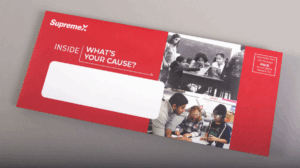
To paraphrase Mark Twain, reports of the death of direct mail are greatly exaggerated. Direct mail boasts some of the highest response rates compared to digital marketing channels. According to the Data & Marketing Association, direct mail response rates can reach 4.9% for house lists and 1.12% for prospect lists. In contrast, e-mail marketing averages a response rate of less than 1%. This means that businesses and non-profits using direct mail are more likely to engage with their audience and generate tangible leads or gifts. But like everything else, to obtain the greatest possible return on an investment of finite resources, non-profits need to work harder and especially work smarter. Here is some timely advice and counsel from Brenna Morlock, Senior Consultant, who provides strategic guidance and project management support to AmPhil’s Direct Response clients, on getting the strongest results from the direct mail Investment.
(1) Direct mail letters shouldn’t be written above a 6th grade reading level, i.e., you want a letter that is easy to read. Googling “Flesch Reading Ease Score” or “Flesch-Kincaid Grade level” is recommended and running your direct mail letter through a tool that uses a scoring system. If the comprehension level ends up too high, see if there are easier words or simpler ways to phrase the ideas written in the letter.
(2)Mindful direct mail letters tell the donor or prospect what they need to do and how much they should give. If an individual knows that you are asking them to donate, it makes it easy for them to say yes. Bonus points for putting the ask on the first page in bold, so the donor doesn’t have to rifle through pages to find the ask.
(3) Including a reply form and envelope, adding a QR code, having options for monthly giving, and providing the ability to fill out credit card information all give the donor ways to respond to a letter. At the end of the day, giving via check still reigns supreme for direct mail but as donors become more comfortable with online and automated giving it is crucial to include additional ways to donate.
Good Fortune is for Sharing
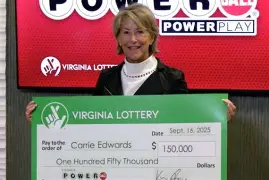
Our spirits are continuously lifted by the examples of everyday people, who seize the opportunity of the sun shining on them not to pamper themselves, but to provide assistance to those who most need it the most and will truly benefit from financial support. A Virginia resident and grandmother turned her $150,000 Virginia Lottery Powerball win into a blessing for others by donating the entire amount to charity. Carrie Edwards won the prize and decided to split the money evenly among three organizations close to her heart. “I’m sitting in a meeting, and I look at my phone, it says, ‘Please collect your lottery winnings.’ So, I go home and log into my account, and it says, you won the Monday, September 8th draw for $50,000 and you had the 3x multiplier, and so you won $150,000,” said Edwards recounting the moment she discovered her win. Despite the joy and gratitude she felt, Edwards knew immediately what she wanted to do with her windfall. “As soon as that divine windfall happened and came down upon my shoulders, I knew exactly what I needed to do with it and I knew I needed to give it all away,” she said. The first recipient is the Association for Frontotemporal Degeneration, an organization supporting families affected by early-onset dementia, a disease that claimed Edwards’ husband last year. The second is Shalom Farms, a non-profit focused on creating an equitable food system in Richmond, where Edwards volunteers. Lastly, the Navy Marine Corps Relief Society, which provides resources for military families, received a share, reflecting Edwards’s upbringing in a Navy family. Edwards hopes her actions will inspire others to see unexpected blessings as opportunities to give back.
On Bookshelf: Reimaging Nonprofits

Going where many dare not, Reimagining Nonprofit and Philanthropy: Unlocking the Full Potential of a Vital and Complex Sector challenges existing sacred cows across a variety of issues relevant to non-profits and philanthropy. Each chapter delves into a specific area of work (fundraising, boards, hiring, and so on), analyzes the challenges, and provides concrete solutions for change.
Written by Vu Le, former non-profit executive and thought leader in the field, this book features leaders doing new things that go against the grain and is written in an easy-to-digest, oftentimes humorous tone. Readers will be left fired up, with their existing notions challenged, ready to flip over some tables and (figuratively) burn some systems down. Le explores topics including:
- Scarcity, martyrdom, and learned helplessness, separating vision and mission, and “bizsplaining” to the corporate sector
- The folly of Robert’s Rules of Order and reimagining governance through evolutionary and minimally-viable boards
- New leadership decision-making models, shifting away from the hierarchical model into a more distributed one. Reimagining Nonprofit and Philanthropy: Unlocking the Full Potential of a Vital and Complex Sector is an essential read for all non-profit leaders, professionals, and donors who are looking to completely reimagine the way non-profits think, operate, and make an impact.
Love of Chocolate

Launched in 2013, the Forrest E. Mars, Jr. Chocolate History Grant has a special emphasis on uncovering and sharing chocolate’s role in global history as well as its influence on heritage and culture. Grant funds will be awarded for project(s) that investigate and/or educate on the history of chocolate, uncover new chocolate innovation, development of cocoa science as well as highlight the chocolate making process. Anticipated audience reach will also play an important role in determining grant recipients. Last year they launched a Classroom Resource Grant for teachers of K-12 students in the United States. They have seen how engaged young people are when learning about the history of chocolate and they want to help educators bring this story, as well as much needed materials, into their classrooms.
The scholarship process is competitive, and the awards will be based on merit as judged by a panel of experts. The educational impact will be at the forefront of this decision process as will attention to equity, inclusion, and diversity in the proposal. A minimum of $50,000 in grant funds will be awarded. The winners of the Forrest E. Mars, Jr. Chocolate History Grant will be announced at the Annual Meeting of the Heritage Chocolate Society, to be held on February 18-19, 2026 in Washington, D.C. Feedback on grant applications will be provided when the selection process is completed. Anything that puts a smile on your face must be good for you. Nutritionists now stress that chocolate, especially dark chocolate, is even good for you.
Quiz: Best Places to Live
The cities with the best quality of life have high scores on U.S. News’ Quality of Life Index by measuring how satisfied residents are with their daily lives, and takes into account factors like crime, quality and availability of health care, quality of education and average commute time. For the 2025-2026 Best Places to Live rankings, 859 cities are analyzed to find the best. Match the following cities with their respective scores to answer this question (higher means a better quality of life). Answers are shown at the bottom of the page.
1. Bellevue, WA a. 4.4
2. Brookline, MA b. 4.5
3. Johns Creek, GA c. 5.8
4. New York City d. 6.1
5. Passaic, NJ e. 7.0
Stratagems is published monthly by Jim Eskin, Founder of Eskin Fundraising Training, LLC. We offer workshops and customized training sessions for board members, staff and volunteers of non-profit organizations of all kinds and sizes. For details about our services and information, or to find out how to schedule a training session for your organization, visit our website. Follow our events on Facebook, and read more articles about philanthropy on our LinkedIn page.

Jim Eskin, Founder
Eskin Fundraising Training
Email: [email protected]
Cell: 210.415.3748
www.eskinfundraisingtraining.com

ANSWERS TO THIS MONTH’S QUIZ: 1=e 2=c, 3=d, 4=a, 5=b |