Fundraiser Manifesto
Arguably, the most admired, respected and influential fundraising consultant, speaker and author of our time — the late Jerold Panis — pretty much summed it up when he declared that the No. 1 characteristic of successful fundraisers is “outsized optimism.” In other words, we believe. We dream. We make the impossible possible. And our can-do attitude is infectious. This kind of faith (not in a spiritual sense, though that is always powerful) has, continues to, and will always drive positive social change.
As I reflect on the blessings of life as I’ve entered another decade, it’s how fortunate I’ve been to have so many people believe in me and encourage me to aim and reach higher. This starts with family and progresses onward with extraordinary supervisors, colleagues, mentors and partners who so generously shared their precious gifts of time, talent and treasure. I can’t leave out a lifetime circle of golden friends. Here’s the rub: When people believe in you, you believe in yourself, and you believe in others. When life has its way of draining our supply, fundraisers find a way of manufacturing more hope. This is philanthropy’s superpower. We all embrace the conviction that we can take matters into our own hands and that more is possible. There couldn’t be a more fitting time to seize the superpower of outsized optimism. The beautiful philanthropic family composed of non-profit leaders including so many unstoppable workhorses can join forces and overcome any challenges to forge a brighter, stronger and more socially just future. One other shining characteristic of successful fundraisers: They have the humility to understand that it’s not about them. It’s about the mission, the donors, and especially those who benefit from a delectable smorgasbord of good works. Every manifesto deserves an anthem. For a shot of inspiration, I always enjoy listening to Brian Stokes Mitchell’s “The Impossible Dream” from “Man of La Mancha.”
Get on GivingTuesday Bandwagon
GivingTuesday is a global movement unleashing the power of radical generosity. It is held the first Tuesday following Thanksgiving, or this year on December 2, 2025. It was created in 2012 and has raised more than $18.5 billion as a simple idea: A day that encourages people to do good through a boundless variety of effective ways. Since then, it has grown into a year-round global force that inspires hundreds of millions of people to give, collaborate, and celebrate generosity. Whether it’s making someone smile, helping a neighbor or stranger out, showing up for an issue or people we care about, or giving some of what we have to those who need our help, every act of generosity counts and everyone has something to contribute toward building the better world we all want to live in. With 16% of GivingTuesday donors using this occasion to make their first gift to organizations, it presents not only a massive opportunity for donor engagement but cultivation as well. Donors who give on GivingTuesday — including first-time givers —have a higher retention rate than those who give earlier in the year. Last year 36 million people took part in Giving Tuesday in 2024 donating a record $3.6 billion
Celebrate With Us
National Philanthropy Day (NPD) is celebrated every November 15th. Since it falls on a Saturday this year we have decided to make it the theme of our next “Fundraising, Friendship, Fun” Live Zoom-based broadcast Wednesday, November 19th, 4 to 5 p.m., Central time. Philanthropy is “the love of humankind,” and National Philanthropy Day/Week is the time of year that thousands of people around the world come together to put that word into action and recognize the change that word has brought to our communities. This is a celebration of philanthropy — giving, volunteering, and charitable engagement — that highlights the accomplishments, large and small, that philanthropy, and all those involved in the philanthropic process, make to our society and our world. There are so many admirable men, women and children to thank. The philanthropic ecosystem encompasses more than 1.5 million organizations, 13 million employees, 24 million board members, nearly 80 million volunteers and hundreds of millions of donors from all different socio-economic backgrounds. Donors range from the amazing MacKenzie Scott who has contributed more than $20 billion to 2,500 non-profits with no strings attached to the neighbor next door who weekly places $10 in the collection plate, culminating in nearly $600 billion annually. MacKenzie Scott would be the first to remind us that everyone who contributes time, talent and treasure is indeed a philanthropist. We are calling on our learning community of professional and volunteer non-profit leaders and other friends to give much deserved shoutouts to the passionate organizations and projects and all the wonderful people that make them possible. We want both you and that special person to appear on screen and briefly share an inspiring story. Join us to salute philanthropy that you have had the privilege of appreciating its profound impact. Participation is free but you must register here.
Finish the Year Strong

A lot of things have changed in the world of fundraising, especially in the last decade. But there’s been one resounding constant: People are most generous during the last quarter of the year. Non-profits need to turn up the volume, and connect, motivate and resonate with donor and donor prospects who are just wired to give more as the year comes to a close. Non-profits just aren’t going to post strong fundraising results without finishing the year in a flurry. Read our EIN Presswire news release on sound principles, proven strategies and best practices on scoring the most robust year-end giving results possible.
Not So Fast

Non-profit executives anticipating that intergenerational transfer of wealth have a better chance of getting the cash after it has passed to the next generation. Only 1% of older Americans versus 3% of younger Americans have factored in philanthropy as a primary purpose for their wealth according to new data from The Harris Poll study “America’s Great Wealth Transfer.” The majority of older Americans plan to leave inheritance to their children (81%). When this transfer occurs, the new generation will have views on wealth and financial priorities that differ from those of their parents. Older Americans primarily see their wealth as a path to security (42%), and as a means to live their desired lifestyle/for enjoyment (35%). Younger Americans likewise share these sentiments (32%, 23% respectively), they significantly more often than older Americans see wealth as a method of building a legacy (22% younger, 12% older) and to achieve personal fulfillment (18%, 8% respectively). The Harris Poll defined older Americans as ages 55 to 80 and older and younger Americans as 18 to 54. The polling was done for financial firms for insights on how to deal with wealthy clients. Financial returns stand as both generations’ top priority for their investments (54% older, 62% younger). However, older Americans place more importance on diversification (43%, 24% respectively) and minimizing risk (42%, 28%).
Crystal Ball

For more than a quarter century, Foundation Source has partnered with some of the most generous donors, non-profits, advisors and institutions to turn philanthropic vision into lasting impact. Despite market volatility and policy shifts, their clients have continued to give at exceptional levels, underscoring philanthropy’s resilience and its essential role in supporting non-profits when other funding sources fluctuate. That commitment remains clear in the latest data from 2025. They conclude on an upbeat note that strong momentum is visible heading into the giving season. Philanthropic activity across the client base remains strong, with private foundations and DAF account holders (through their partner Charityvest) collectively making more than 71,000 grants, totaling more than $1.6 billion, to more than 27,000 recipients through the end of September 2025. The top areas for donations were Education ($262M), followed by Public & Societal Benefit ($145M) and Human Services ($139M). They expect this momentum to continue as donors finalize their 2025 gifts and plan for the year ahead. As we approach 2026, one thing is clear: Philanthropy continues to evolve in both purpose and practice. New tax policies are prompting donors and their advisors to plan more strategically. Shifting government funding is expanding the role of private philanthropy as a stabilizing force for critical services. And women, as well as the next generation of donors, are redefining what generosity looks like — prioritizing things like speed, transparency, and impact over convention.
Do You Know Her?
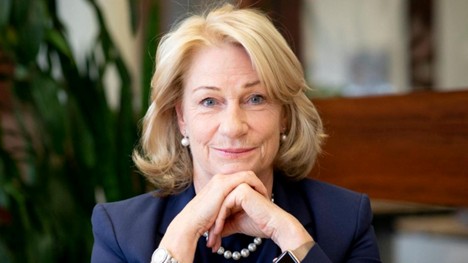
Most names of America’s biggest donors to charity likely sound familiar. How about Marilyn Simons and her family, who have donated $9.4 billion, which is 23% of their net worth of $31 billion? They focus on science, math, and climate change, supporting research, education, and technology-driven solutions. Since its founding in 1994 by the late Jim and Marilyn Simons, the foundation has been a champion of basic science through grant funding, support for research and public engagement. They embrace asking the big questions and providing sustained support to researchers working to unravel the mysteries of the universe. Their passion is to make space for scientific discovery. The Simons Foundation makes grants in four areas: Mathematics & Physical Sciences, Life Sciences, Autism & Neuroscience, and Science, Society & Culture. Their Flatiron Institute was opened in 2016 and conducts scientific research in-house, supporting teams of top computational scientists. Science requires a diversity of perspectives. So, they actively promote collaboration across physical and intellectual barriers through a pioneering grantmaking approach, and are committed to the sharing of knowledge within the scientific community. The Simons Foundation is based in New York City and currently has a staff of over 500 people, half of whom are scientists. Marilyn Simons serves as Foundation Board Chair.
In Hock

U.S. student loan debt and credit card balances reached record highs this year, driving an overall high for U.S. household debt. Total household debt hit a record high of $18.59 trillion from July through September of this year. The number marked a 1% increase from the previous quarter, showing that debt balances “are growing at a moderate pace,” according to researchers. U.S. household debt levels have reached an all-time high, according to the latest data released by the Federal Reserve Bank of New York. Debt includes all major categories, such as mortgages, car loans, credit card balances and student loans. Researchers at the Federal Reserve Bank of New York said that debt balances “are growing at a moderate pace,” pointing to the 1% increase. The researchers reported that, although Americans’ overall household balance sheets remain “pretty strong,” younger borrowers are showing emerging signs of weakness. For example, Americans’ student loan debt has hit a new record, totaling $1.65 trillion in the third quarter of 2025. Delinquency rates have sharply increased, with 9.4% of all student loan balances now considered 90 days delinquent or more, meaning borrowers are late or not paying at all. The percentage has increased from 7.8% in the first quarter.
Above the Fruited Plain

Gallup and the LOR Foundation have released a new study, “Unlocking Local Leadership: Why Rural People Step Forward to Help Their Communities.” The findings reveal that a strong sense of connection to community is a powerful but underutilized asset in rural America, where nearly half of residents (46%) express a desire to become more involved but less than 10% currently lead local action. In the study, improving social connections and creating easier access to financial support emerged as key ways to support further action. More than eight in 10 rural Americans say they are proud to be part of their communities (81%) and that people in their communities help one another when needed (82%). This emotional connection forms the foundation for community engagement. Among those who report high levels of community cohesion, 42% are motivated to lead a local initiative, over triple the rate of those perceiving low cohesion (12%). Rural Americans are especially likely to contribute through informal acts of support; 68% say they frequently help neighbors, compared with 55% of urban Americans. But a gap emerges when it comes to formal leadership involvement, with fewer than one in 10 rural residents saying they have organized or led a local event or program, even though 22% are somewhat or very motivated to do so. Although financial resources are often needed to start a project, when asked what would make them more likely to lead a local project or initiative, the most common motivator that rural Americans report is being connected to others who want to work alongside them (65%). The data show that rural America’s existing social infrastructure is a vital resource — and that strengthening these connections is as important, if not more so, to supporting local leadership as financial investment. For example, those who are already highly involved in their communities are much more likely to be motivated to lead and to have ideas for making a positive local impact than those who are not involved. The most common obstacle to organizing or leading a local initiative is a lack of financial support, cited by 68% of rural respondents. Other challenges include not having enough people to help (60%), not having time (59%) and not knowing where to begin (52%). Notably, four in 10 say they simply haven’t been asked to lead.
On the Bookshelf: Money With Meaning

Do you want to use your wealth for good? The world is on fire with financial, social, and political challenges. Philanthropy has an important role to play, yet many donors give without lasting impact—or remain on the sidelines. In Money with Meaning: How to Create Joy and Impact through Philanthropy, Alex Johnston empowers you to maximize your impact and your joy as a donor. Through four key concepts — Getting Visionary, Getting Real, Getting Together, and Getting Better — Alex offers a guide to “meaningful giving,” where donor satisfaction and social impact meet. From insights on your personal development as a donor and understanding the true impact of your giving to practical advice on hiring help and designing philanthropic legal structures, Money with Meaning is a necessary guide for any philanthropist who wants to change the world for real. Alex is President and Founder of Building Impact, a philanthropic advising practice that has helped its clients give away more than $750 million over 10 years.
Celebrity Corner

Simon Cowell, 66, has made a name for himself as the strict, straightforward, and occasionally even harsh judge on TV talent shows. As a producer, media company owner, and the mastermind behind well-known programs like The X Factor and America’s Got Talent, he’s built a very successful career. Despite his tough on-screen image, he has accomplished a lot. Now, as a loving father, Simon Cowell has said that his entire $600 million fortune will not be left to his son, Eric. Instead, he intends to give it all away to charity. “I don’t believe in passing wealth from generation to generation,” he said. “College will be paid for, and then you must start.” It’s a bold stance in a world where most fortunes stay in the family — one that puts values and independence above inheritance.
Quiz: States and Gift Giving
The holidays are known as the season of giving, and some Americans take it very seriously. With shopping for gifts kicking off as early as nearly one year in advance for some, the holiday season can truly bring out the best in some people. Creative Fabrica surveyed residents of each state and asked about their plans — buying habits, who they buy for, how much they spend, and more. Using these responses, they crafted a generosity scale and ranked the states from the most generous to the most stingy. Match the following states with their respective generosity score (0 to 100). Answers are shown at the bottom of the page.
1. Mass. a. 70.60
2. N.Y. b. 79.61
3. Tenn. c. 86.93
4. Texas d. 91.94
5. Utah e. 99.17
Stratagems is published monthly by Jim Eskin, Founder of Eskin Fundraising Training, LLC. We offer workshops and customized training sessions for board members, staff and volunteers of non-profit organizations of all kinds and sizes. For details about our services and information, or to find out how to schedule a training session for your organization, visit our website. Follow our events on Facebook, and read more articles about philanthropy on our LinkedIn page.

Jim Eskin, Founder
Eskin Fundraising Training
Email: [email protected]
Cell: 210.415.3748
www.eskinfundraisingtraining.com

ANSWERS TO THIS MONTH’S QUIZ: 1=e 2=c, 3=d, 4=a, 5=b |